A corporate lawyer takes free legal calls from complete strangers. No invoice, no consultation fee, no "let's discuss pricing first." Just one condition: it has to happen during his commute. Fifteen, twenty minutes, whatever the drive takes, that's the only slot he's willing to hand over for free. Everything else on his calendar stays his.
Most professionals do the opposite. The instinct in law, accounting, consulting, and agency work (anywhere expertise is the product) is to protect it. Ration it. Make people pay before they get the good stuff, because giving it away for free feels like giving away the sale. So the free content that does go out tends to be thin: a generic checklist, a "5 tips" post, something that costs nothing to produce and delivers about as much.
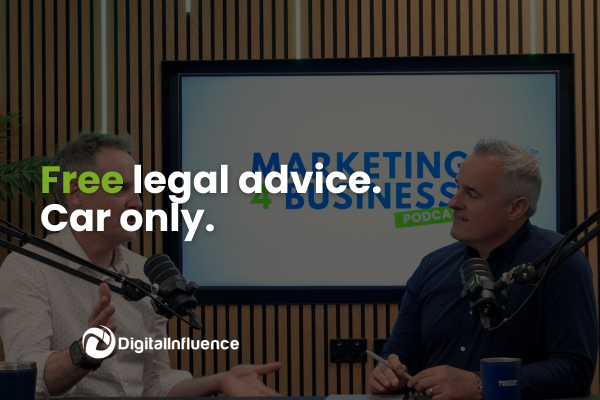
This particular lawyer runs it the other way, and it's not a one-off gimmick. It's the actual engine behind how he's built a following, a firm reputation, and a pipeline of clients over the better part of two decades. It came up in a conversation on the Marketing 4 Business podcast, where host Scott Wilson sat down with Steve Moe, a Christchurch-based corporate lawyer, author, and podcaster in his own right, to unpack how he thinks about marketing without really thinking of it as marketing at all.
The pattern underneath what he does holds up regardless of your industry. It's not about being generically "helpful." It's about where you give value away, when you're willing to do it, and what filter you run everything through before it goes public.
The Old Model vs. the Value-First Model
Here's the tension worth sitting with: giving expertise away for free is supposed to be good marketing advice, and yet it so often produces nothing. You spend an hour on the phone with someone, they say thanks, and you never hear from them again. So the natural response is to tighten up: gatekeep, charge sooner, stop giving the real answer away until there's a contract.
Moe's approach suggests the problem was never the "giving." It's that most people do it without any real system. Four decisions separate a sustainable habit from either burnout or wasted goodwill.
1. Make the free thing a diagnosis, not a teaser
Long before "give value away" was standard advice, Moe was already doing a specific version of it. Back in 2005, working off a mentor's push to give knowledge away rather than hoard it, he'd record a short video (using early screen-recording software) walking through exactly what was wrong with a prospect's website or marketing, and exactly what he'd do about it if it were his. Not a teaser. A real, specific, usable answer. No strings attached.
The instinct most people have is to hold something back, saving the real insight for the paid engagement so the free version stays deliberately incomplete. Moe's version does the opposite: give the whole diagnosis away. Most people who get a genuinely useful, specific answer don't just walk off and implement it themselves. They come back and ask you to do it for them, because you've already proven you know exactly what you're doing.
2. Build generosity around your calendar, not theirs
This is the part that gets skipped in most "just be generous" advice, and it's the actual difference between something sustainable and something that burns you out. Moe's free legal chats aren't offered whenever someone asks. They're built entirely around a slot he's already claimed for himself, his commute between Rolleston and his office in central Christchurch. He's not carving out his best working hours to give something away; he's attaching the free offer to dead time he was going to spend driving anyway.
The same logic shows up in how he handles requests he can't or won't take on. Rather than a flat no, he gives what he calls a "gracious no": declining, but pointing the person toward someone else who'd genuinely be a better fit. He loses nothing, and becomes known as someone who opens doors even in the moments he personally says no.
3. Run everything through one filter before it's published
Moe describes a single test he applies to every LinkedIn post before it goes out: what will the person reading this actually get from it? Not "does this make me look good," not "does this promote the firm," just what's the actual takeaway for the reader. It's a small filter with an outsized effect: it quietly kills the self-congratulatory content most brands default to. Even a photo from a conference, in his hands, comes with three specific things he learned there, not just "great event."
Most content calendars are built around what the business wants to say. This flips it around to what the audience walks away with, which is a very different (and much shorter) list of things worth posting.
4. Treat it as a five-year relationship, not a funnel
The part of this that's genuinely uncomfortable: none of it converts on a predictable timeline. Moe is upfront that his firm produces guides, articles, and free content constantly, and whether or not any given person ever becomes a client, they've still been helped. Some of the people he talks to on that commute call won't need a lawyer for years. Some never will. He's made peace with that, because the content was never really a funnel in the traditional sense. It's the reason he's the first call when someone finally does need what he does.
Why This Actually Works: The Know, Like, Trust Breakdown
Scott's own framing on the episode is useful for separating "being generous" into three distinct jobs, because each one needs a different kind of content to do it:
StageWhat it requiresHow free content builds itKnowCharacter (what you want to be known for)Consistently useful content, not ego postsLikeChemistry (do people warm to you)Showing up often enough, especially on video, that people feel familiar with youTrustCredibility (proof you actually know what you're doing)Longer-form formats, like a real conversation or a detailed guide, where there's nowhere to hide
The mistake a lot of businesses make is trying to build trust with a 30-second ad, or trying to build "like" with a wall of text. The format has to match the job it's doing.
The AI Wrinkle
There's a newer reason this matters more than it used to. As more content online gets generated by AI, on-brand, polished, and interchangeable, it also gets easier to ignore. One of the points raised in the conversation is that differentiating from "AI-generated slop" isn't about better production value. It's about sounding like an actual, specific person, flaws included, rather than a curated highlight reel. A 45-minute conversation, or a video where you're visibly and audibly you, does something a caption never will.
A Quick Checklist to Steal
- Pick one thing you know well enough to diagnose for a stranger in 15 minutes, then build a free offer around it
- Decide when you're willing to give that away (a commute, a fixed weekly hour), not "whenever asked"
- Write your next five posts, then delete any that don't pass the "what do they get from this" test
- Publish one piece of content you're not expecting to convert anything, just to see what happens over 12 months
- Next time you have to say no to something, practice redirecting instead of just declining
Where to Go From Here
You don't need a content calendar overhaul to start this. Pick the single highest-value thing you know how to do, find fifteen or twenty minutes you're genuinely willing to give away on your own terms, and offer it to three people this month. Everything else compounds from there.
Want the full conversation? Listen to "Purpose Over Profit: The Lawyer Helping Kiwi Businesses Find Their Why" with Steve Moe on the Marketing 4 Business podcast, available on your favourite podcast streaming service, or watch it now on YouTube.